

Behind every breast cancer diagnosis is a person.
A mother, a daughter, a sister or a friend. Someone who was going about an ordinary day when breast cancer suddenly became part of her life.
There isn’t always a warning, either. One woman might notice a lump while getting dressed in the morning. Another might go for her regular mammogram, feeling absolutely fine, only to find out that something needs further investigation.
Then there are the women who have already been through treatment, those who are still receiving it and the families who have experienced breast cancer alongside someone they love.
It’s these very different experiences that sit at the heart of this year’s Breast Cancer Awareness Month theme: “Every story is unique, every journey matters.”
No two women will experience breast cancer in quite the same way. Their circumstances, the care they need and the people supporting them will all be different. What shouldn’t differ is the opportunity to receive proper care and have their concerns taken seriously.
This October, we’re looking beyond the pink ribbons to talk about breast awareness, the importance of screening and some of the questions that might be standing between you and booking your next mammogram.
Why Breast Cancer Awareness Month Matters
Every October, the pink ribbons come out. You’ll see them in shops across South Africa, across social media and in campaigns encouraging women to take their breast health seriously.
There’s a reason we keep having these conversations.
The World Health Organization estimates that 2.4 million women worldwide were diagnosed with breast cancer in 2024. During that same year, approximately 694,000 women sadly passed away from the disease.
Here in South Africa, the figures bring the issue much closer to home. According to the Global Cancer Observatory’s 2024 estimates, published in July 2026, approximately 13,338 new breast cancer cases and 5,377 deaths occurred in the country.
Breast cancer was also the most frequently diagnosed cancer among South African women, accounting for roughly one in four new cancer diagnoses.
The People Behind the Figures
Behind those figures are families whose lives have been turned upside down, women undergoing treatment and others trying to come to terms with an unexpected diagnosis.
Medical advances have improved breast cancer treatment over the years, but getting screened and treated early still isn’t equally easy for everyone.
The Challenges Faced by South African Women
For some women, booking a mammogram is simple. They make the appointment, get there and have it done.
For others, it isn’t nearly that easy.
There might be a long drive involved, time off work, transport costs. Or just the very real question of whether there’s enough money left that month to pay for the appointment.
And then there’s the part nobody can really measure properly.
The fear.
Some women put off screening because they’re scared of what they might find out. Others simply aren’t sure when they should start going for mammograms. And if you feel perfectly fine, it’s very easy to think, “I’ll do it later.”
That’s why these conversations still matter.
Breast Cancer Awareness Month is a chance to talk about the things women are genuinely worried about, answer some of those questions and hopefully make that next appointment feel a little less daunting.
Understanding Your Personal Breast Cancer Risk

You might have heard someone say they’re not particularly worried about breast cancer because nobody in their family has ever had it.
It’s a fairly common assumption, but family history is only one part of the bigger picture for breast health.
Breast cancer can develop in women who have never had a close relative diagnosed with the disease. Age inherited genetic changes and certain aspects of your medical history can all influence your overall risk.
Certain factors can increase your risk, including getting older, inherited genetic changes such as BRCA1 and BRCA2 variants, and having close relatives who have experienced breast cancer. Drinking alcohol can also increase your risk.
But here’s where things become a little less straightforward.
You could have several of these risk factors and never develop breast cancer. You could also have none of them, apart from being female and getting older, and still receive a diagnosis.
It’s one of the reasons doctors ask so many questions about your medical history. They’re trying to understand what your personal risk looks like, rather than treating everyone as though they’re in exactly the same situation.
For example, if your mother or sister has had breast cancer, your doctor may want to know how old she was when she was diagnosed. Depending on your family history, genetic testing or an earlier screening schedule might be worth discussing. Some women at higher risk may also be advised to have breast MRI examinations.
And that’s really the point. What works for one woman might not be the right approach for another.
If you have questions about your risk, bring them up with your doctor. Even if there’s no history of breast cancer in your family, it’s worth finding out when you should begin screening and whether there’s anything in your medical history that needs attention.
You don’t need to wait until something feels wrong to ask about your breast cancer risk.
Know Your Breasts | Changes You Shouldn’t Ignore
You know your body better than anyone else.
Being familiar with how your breasts normally look and feel makes it a lot easier to recognise when something changes or feels off.
That doesn’t mean worrying about every little difference. Breasts naturally change throughout life, particularly during menstruation, pregnancy, breastfeeding and menopause.
What matters is recognising changes that are unusual for you.
These might include a new lump or thickening in the breast or underarm, a change in breast size or shape, unusual skin dimpling, changes around the nipple or unexpected nipple discharge, particularly if it’s bloody.
And remember, breast cancer doesn’t always cause pain. A painless lump still deserves medical attention.
What if you’re too young for a routine mammogram?
You should never ignore an unusual breast change simply because you haven’t reached the recommended screening age.
Your doctor can assess your symptoms and determine whether further investigation is necessary. Depending on your age and circumstances, a breast ultrasound or another examination may be recommended.
Fortunately, many breast lumps and changes turn out to be benign.
Still, if you’ve noticed something unusual, make an appointment to have it checked. Finding out what’s causing the change is far better than putting it off because you’re unsure whether it’s worth mentioning.
Your First Mammogram, What to Expect & Why It Matters
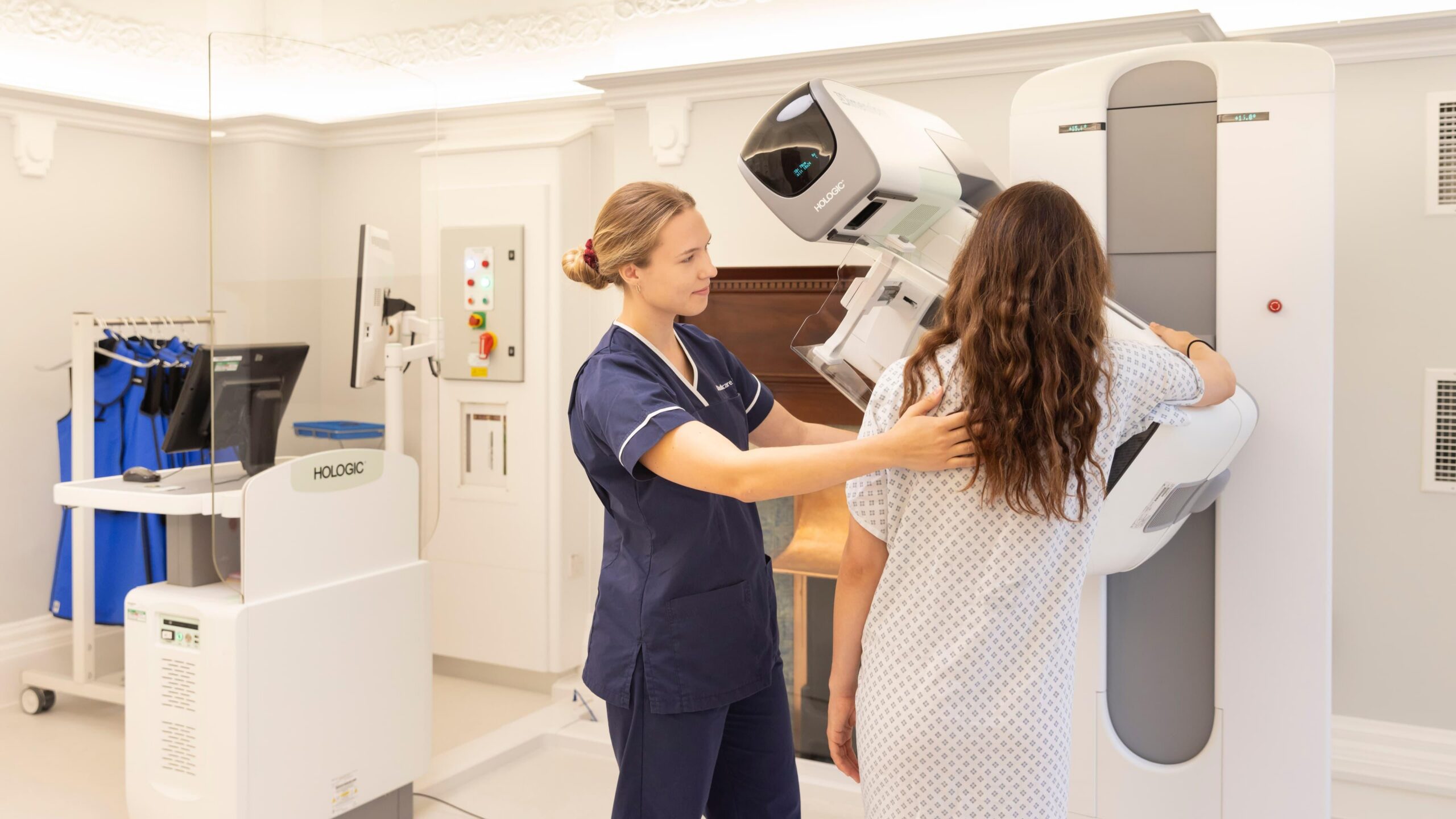
Your first mammogram might feel like unfamiliar territory, especially if nobody has explained what actually happens during the appointment.
You may have heard stories about the examination being uncomfortable. Maybe it’s the thought of waiting for the results that’s bothering you. Or perhaps you’ve simply never had a real reason to think much about mammograms until now.
Knowing a little about the procedure beforehand can help you feel more prepared when you arrive.
A mammogram is a specialised, low-dose X-ray examination of breast tissue. It allows radiologists to identify abnormalities, these can include certain changes that may be too small to feel during a physical examination.
This matters because some breast cancers can develop without necessarily causing a lump or any other noticeable change. Screening gives radiologists an opportunity to look for signs that might otherwise go unnoticed.
When you arrive for your examination, your radiographer will help position each breast in the mammography machine. The breast is compressed briefly between two plates to spread the tissue and produce the images your radiologist needs.
It might feel a little uncomfortable, particularly when the breast is compressed. Everyone’s experience is a little different.
Please speak up if something hurts or you’re feeling particularly nervous. Your radiographer can talk you through what’s happening and give you a moment if you need one.
There are also a few things you can do beforehand.
A comfortable top that you can easily remove is a good idea, as you’ll need to undress from the waist up. Avoid applying deodorant, powders or lotions around your breasts and underarms on the day of your examination, as certain products can interfere with mammogram images.
If you have already had a mammogram somewhere else before then try to bring along your previous images and reports or arrange for the practice to receive them.
The main reason for this is that it gives your radiologist something to compare your new images against, making it easier to spot any changes.
If it’s the results you’re worried about, that’s understandable. But remember, you don’t have to wait until something feels wrong to have a mammogram. That’s the whole point of routine screening after all to catch anything that shows up nice and early!
Why Mammography & Breast Ultrasound Work Together So Well

Mammography and breast ultrasound are both useful imaging examinations, although each gives your radiologist a different view of what’s happening inside your breasts.
The Mammogram
A mammogram uses low-dose X-rays to look at breast tissue. It can reveal changes that need a closer look, including tiny deposits of calcium known as calcifications, lumps and unusual patterns within the tissue.
The Ultrasound
Breast ultrasound uses sound waves to create images rather than X-rays. It can help radiologists investigate particular areas more closely and distinguish between certain fluid-filled cysts and solid masses.
Having both examinations can give your radiologist more information to work with, particularly when something needs further investigation.
One situation where this can be useful is when a woman has dense breast tissue.
Dense breasts contain a higher proportion of glandular and fibrous tissue compared with fatty tissue. On a mammogram, dense tissue appears white, which can make certain abnormalities more difficult to identify because they may appear similarly white.
Having dense breasts is common more so than most women realise, and it isn’t something you can determine simply by feeling your breasts.
Mammogram Costs and Breast Screening
For many women, deciding to book a mammogram is only the first step. There are practical questions too, particularly around cost, medical aid and finding a screening facility that’s easy to get to.
And sometimes, not knowing what an appointment is going to cost is enough to make someone put it off.
October to Mid-November 2026 Mammogram Pricing at Bergman Ross & Partners Radiologists
For Breast Cancer Awareness Month, Bergman Ross & Partners Radiologists is offering a discounted cash rate of R1,750 for a mammogram including breast ultrasound until mid-November 2026.
That’s worth noting because all mammograms at Bergman Ross & Partners Radiologists include a breast ultrasound as part of the examination. You’re not booking one and then being surprised by the need for the other later.
The discounted rate applies to cash-paying patients.
If you’re claiming through medical aid, your cover will depend on your scheme and benefit option, so it’s a good idea to check with your provider before booking. They’ll be able to confirm what’s covered and whether authorisation is needed.
A breast ultrasound performed on its own is also available at a discounted October cash rate of R1,400, although whether an ultrasound alone is appropriate will depend on why you’re having the examination and may require a referral from your doctor in this case.
Where Can You Book a Mammogram?
Bergman Ross & Partners Radiologists offers mammography services at selected branches in Cape Town, including its N1 City, Kuils River and Sea Point branches.
Routine mammograms can be booked directly with Bergman Ross & Partners Radiologists without a doctor’s referral. However, if you’ve noticed a lump or another unusual breast change, speak to your doctor first. They can advise you on the examinations needed to investigate your symptoms.
What Happens If Your Mammogram Shows Something Unusual?
Waiting for mammogram results can be nerve-racking, even when you’ve attended a routine screening appointment and haven’t noticed anything unusual.
And if you’re contacted because additional imaging is needed, it’s natural for your mind to jump to the worst possible conclusion.
But remember being called back doesn’t necessarily mean there’s anything seriously wrong.
Your radiologist might want to examine one particular area more closely, compare your images with an earlier mammogram or request another type of scan. Sometimes, getting a better view is all that’s needed.
There are occasions when imaging alone can’t provide a definite answer. If this happens, your doctor may recommend a biopsy so that a small sample of tissue can be examined.
You might also notice the term BI-RADS on your mammogram report. This is simply the reporting system radiologists use to classify breast imaging findings. It also helps communicate whether further examinations or follow-up appointments are recommended.
Medical reports aren’t always easy to understand. If something in yours worries you, speak to your doctor and ask them to explain the findings and what happens next.
No screening examination is completely foolproof, and mammography is no exception. If you notice a persistent lump or another concerning breast change, seek medical advice even if your most recent mammogram was normal.
Further examinations help your healthcare team get the answers they need to decide what comes next.
You shouldn’t have to sit with unanswered questions.
Every Journey Matters | Supporting Someone With Breast Cancer

Breast Cancer Awareness Month means different things to different people.
For someone who has recently been diagnosed, October might arrive during an overwhelming period of appointments, difficult conversations and treatment decisions.
Someone who has finished treatment might find themselves looking back on everything they’ve been through, while another person could still be dealing with the difficulties of living with advanced breast cancer.
For families who have lost someone, October can bring back memories of the person they love. Some of those memories will be happy. Others may be harder than others to revisit.
There isn’t one correct way to experience any of this.
We often hear stories about courage and strength during Breast Cancer Awareness Month. And while those stories absolutely deserve to be told, there’s room for the difficult days too. Nobody feels brave all the time. Some days, getting through treatment or managing ordinary responsibilities might take everything a person has.
You don’t always have to know what to say.
If someone close to you is going through breast cancer, ask what they need rather than assuming you already know.
Maybe they need a lift to their next appointment, some help with the cooking or someone to take care of the children for an afternoon. Or perhaps they’d simply welcome an afternoon where cancer isn’t the centre of every conversation.
Even the smallest things can take some of the weight off someone’s shoulders.
That support shouldn’t disappear when treatment finishes. There may still be medication to take, follow-up appointments to attend and a whole lot of adjusting to do afterwards.
For someone living with metastatic breast cancer, treatment and its associated challenges may remain part of everyday life for years. Having people, they can rely on during that time can make an enormous difference in their life.
Above all, remember that someone’s experience belongs to them. They should be able to talk about their experience in their own words, without feeling that they have to put on a brave face or tell their story before they’re ready.
Sometimes, being there and listening is enough.
This October, Make Breast Awareness Personal
October is a good time to think about your own breast health, but it’s also an opportunity to look out for the women around you.
For you, that might mean finally arranging the mammogram you’ve been postponing, speaking to your doctor about your family history or getting an unusual breast change checked.
You could also check in on a friend who’s going through treatment or remind someone close to you about a screening appointment they’ve been meaning to make.
It doesn’t have to be anything complicated.
If you’ve been thinking about booking a mammogram, Bergman Ross & Partners Radiologists is here to help. Whether it’s your first appointment or you’ve been coming for years, you’ll be looked after by a team that understands how personal these examinations can feel.
If you’re due for a mammogram, contact Bergman Ross & Partners Radiologists to arrange your appointment.
A Few Questions You Might Have Before We End Off
1. At What Age Should I Start Having Mammograms?
Typically, routine mammograms will start at the age of 40, for women at average risk. Women with a strong family history or certain other risk factors may need a different screening schedule, sometimes beginning at a younger age.
If you’re not sure where you fall, ask your doctor. They can help you work out when to begin and how often you should come back.
2. Do I Need a Doctor’s Referral for a Mammogram?
Not for a routine screening mammogram at Bergman Ross & Partners Radiologists. You can book that directly without needing a referral from your doctor.
If you’ve found a lump, noticed nipple changes or something simply doesn’t feel right, that’s a different situation.
3. Is Having a Mammogram Painful?
This is probably one of the most common worries before a first mammogram.
Your breast does need to be compressed for a few seconds while the images are taken, so you will feel pressure. Some women find that uncomfortable, while others are surprised by how manageable it is.
If you’re nervous about it, say so when you arrive. Your radiographer can talk you through each step and let you know what’s happening as you go.
4. Why Might I Need a Breast Ultrasound as Well?
Sometimes a mammogram raises a question that needs a closer look.
An ultrasound can help your radiologist examine a particular area in more detail, especially when they’re looking at a lump or working with dense breast tissue. It uses sound waves rather than X-rays, so it gives a different kind of image.
That difference is useful. Mammography and ultrasound don’t simply repeat the same information, which is why they can work so well together.
At Bergman Ross & Partners Radiologists, a breast ultrasound is already included with every mammogram.
5. Does My Medical Aid Cover Mammograms?
That’s one of those questions that doesn’t have the same answer for everyone.
Your cover will depend on the medical aid you’re with and the option you’ve chosen. Some plans include mammograms as part of their screening benefits, while others may only cover them under certain circumstances.
The easiest thing to do is give your medical aid a quick call before booking. At least then you know what they’ll cover and whether there’s anything you’ll need to pay yourself.
6. Can I Develop Breast Cancer Without a Family History?
Yes.
Many women diagnosed with breast cancer have never had a close relative with the disease.
Family history matters, but it’s only one part of the picture. That’s why breast awareness and speaking to your doctor about the right screening approach still matter, even if breast cancer has never affected anyone in your family.